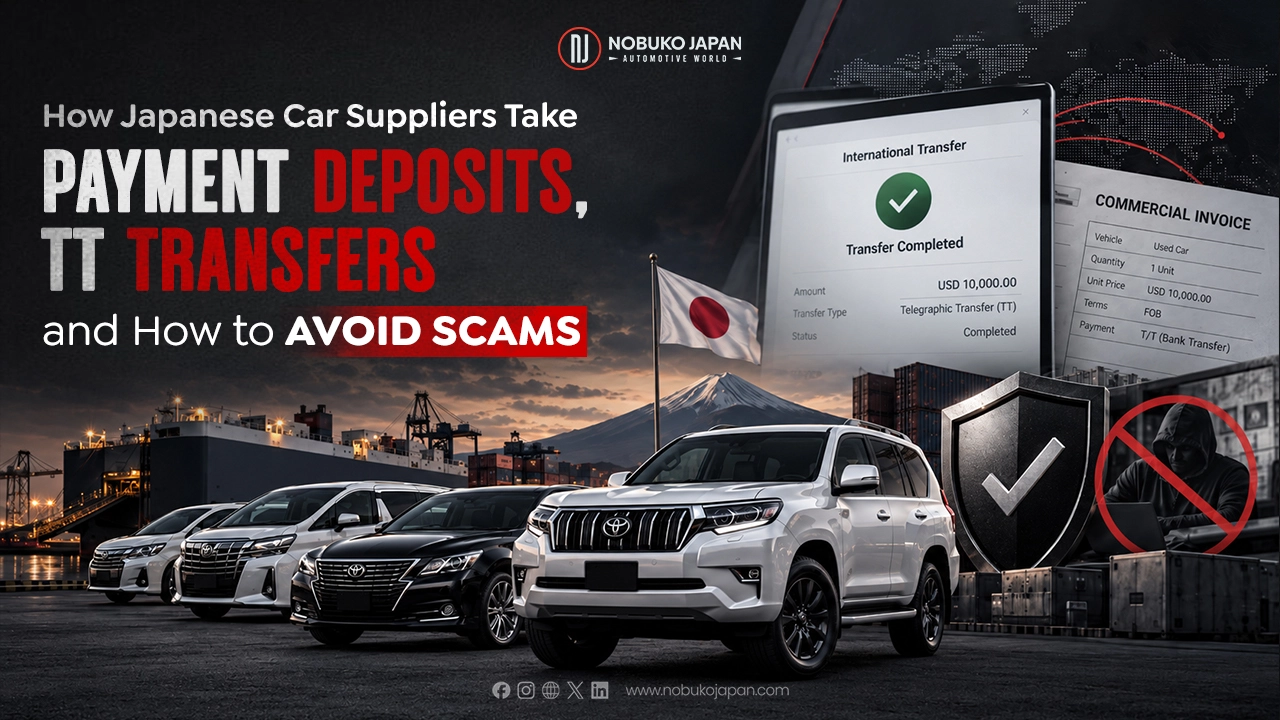
Yes, buying a car from Japan is safe when you pay a registered Japanese used car supplier through a traceable bank transfer to its company account. Most problems buyers run into are not with the car itself but with payment: fake supplier websites, invoices with altered bank details, and requests to pay in ways that cannot be traced or recovered.
Our Vehicle Sourcing Team has handled payments from buyers in the UK, Ireland, Cyprus, Pakistan and the USA for 14 years. This guide explains how payment normally works when you buy a car from Japan, what deposits are for, how telegraphic transfers work, and the scams to watch for.
a genuine supplier invoices you in its registered company name, takes payment by bank transfer to a Japanese company account, explains its deposit and refund rules in writing, and releases shipping documents once the balance has cleared. Anyone asking for payment to a personal account, cryptocurrency, gift cards or a money transfer service should be treated as a scam.
Japanese car auctions are dealer-only, so your supplier bids with its own auction membership and is legally committed to paying for any car it wins. A deposit protects the supplier if a buyer backs out after a winning bid. That is why most suppliers that offer auction buying ask for one.
Deposit terms vary widely between suppliers. Before you pay one, get these answers in writing:
A supplier that cannot explain its deposit rules clearly, or changes them after you have paid, is a supplier to avoid. Our own deposit, payment and refund rules are set out in our terms of trade.
Most cars from Japan are paid for by telegraphic transfer (TT), an international bank transfer sent through the SWIFT network. A few things to know:
Letters of credit exist but are rarely used for single cars because of their cost. Card and online payment services are sometimes accepted for deposits, but rarely for the full price of a car.
| Scam | How it works | How to spot it |
| Cloned supplier website | Scammers copy a real supplier's site, logo and stock photos on a similar domain | Check the exact web address, and contact the supplier through a number you found independently |
| Changed bank details | An email, often from a hacked or look-alike address, says the supplier's bank account has changed | Never act on new bank details sent by email. Phone the supplier first |
| Bargain price | A car is listed well below its auction value to rush you into paying | Compare prices on live auction listings and ask for the lot number |
| Personal or third-country account | You are asked to pay an individual, or a bank outside Japan | The account name should match the supplier's registered company name |
| "Release fee" demand | After payment, you are told the car is held at port and needs an extra fee | Genuine charges appear on your quote. Check any new fee directly with the supplier and shipping line |
| Untraceable payment | You are asked to pay by cryptocurrency, gift cards or a cash transfer service | No legitimate car supplier needs these. Stop contact |
Contact your bank immediately and ask it to try to recall the transfer; the sooner you act, the better the chance. Then report it to the police in your country. In the UK, you can report fraud to Action Fraud. Keep all messages, invoices and payment records, and report any cloned website to the real supplier so it can warn other buyers.
Yes, if the supplier is a registered company in Japan, the account is in its company name, and its refund rules are in writing.
Usually by telegraphic transfer (an international bank transfer) to the supplier's company bank account in Japan, quoting your invoice number.
Typically within a few days of winning the car at auction or confirming a stock car, and before it ships. Your invoice will state the deadline.
Treat any request to pay for a car in cryptocurrency, gift cards or through a cash transfer service as a warning sign.
If you'd like to check our bank details, deposit rules or anything else before paying, contact us through our contact page. You can read what other buyers say on our testimonials page and our Trustpilot profile. When you're ready, browse Japanese used cars for sale, follow our Japanese car auctions, or request a specific car.
Nobuko Japan Vehicle Sourcing Team
Our sourcing team has 14 years of experience in Japanese used vehicles, auction bidding and vehicle sourcing. The team buys at Japanese auctions and from leasing and rental sources every week, and supplies dealers and private buyers in the UK, Ireland, Cyprus, Pakistan and the USA. This guide reflects the payment questions buyers ask us most often, and the scams they have told us about.
Last reviewed: October 2026.
For Latest updates
The Pakistani car market is constantly changing. In fact, sedan cars have been dominating the roads ...
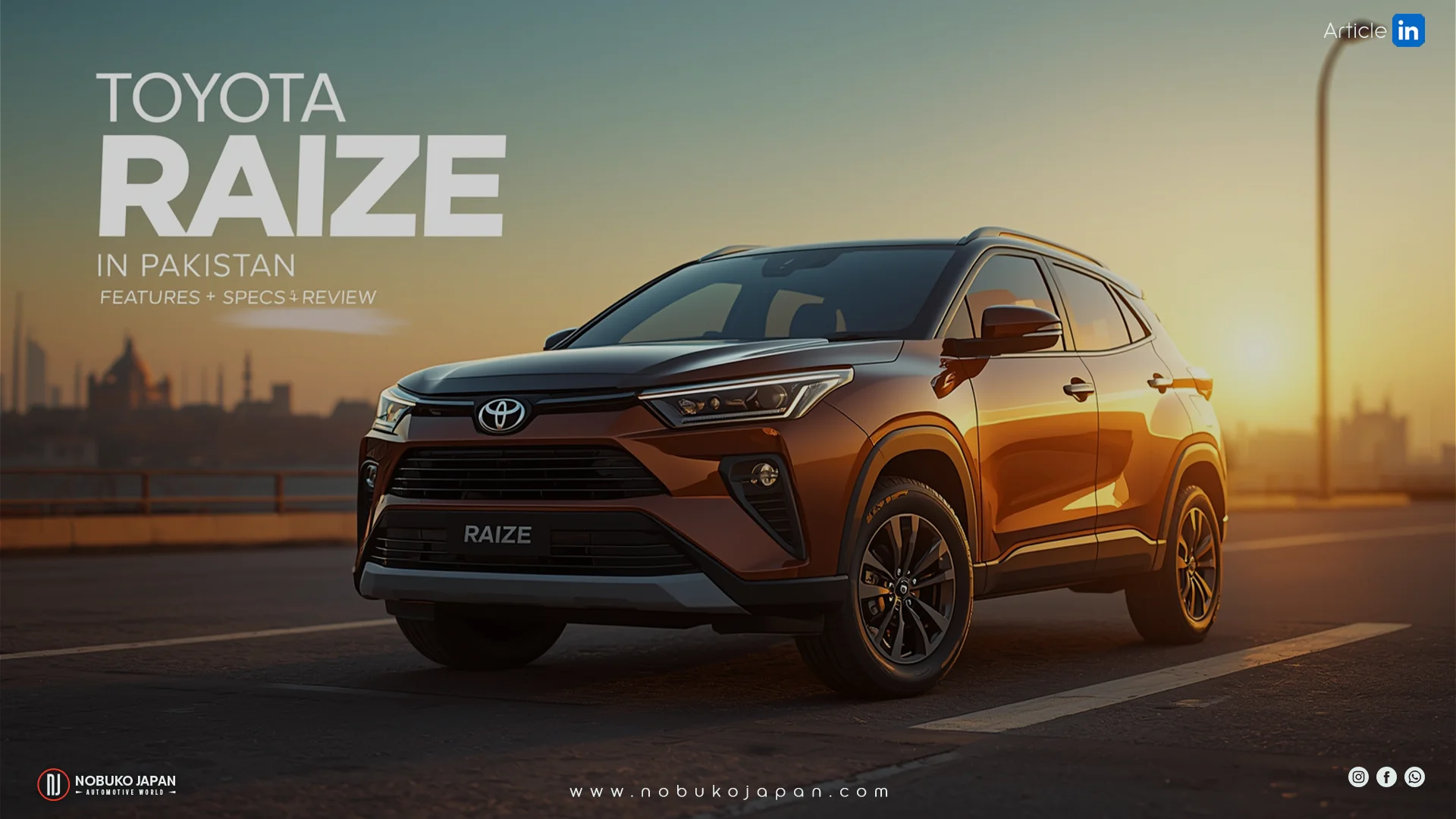
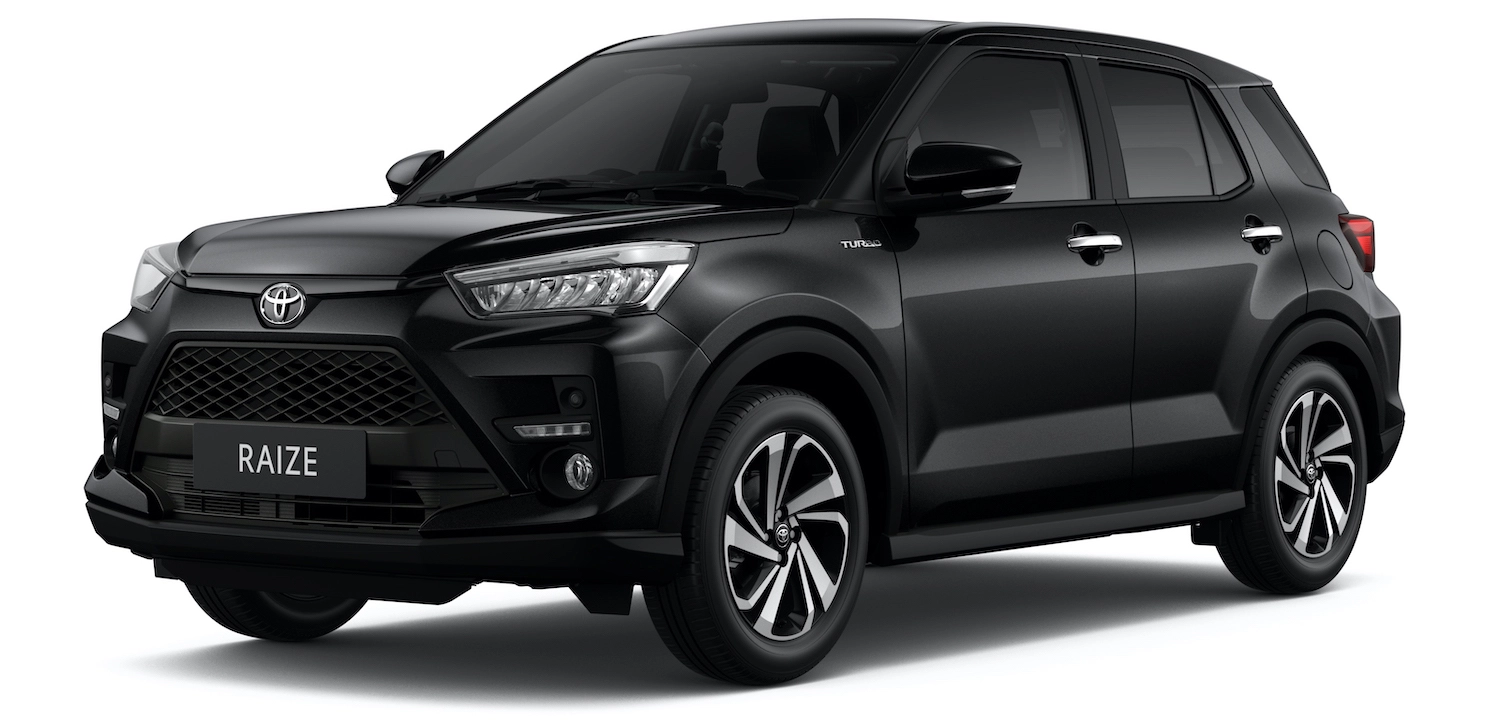
The Toyota Raize has gained popularity within the Pakistani roads since this mini-SUV resonates stro...
Toyota Yaris Sedan is one of the major vehicles in the Toyota portfolio across the globe. This provi...
Considering the purchase of a new automobile in Pakistan? The traffic is heavy, the cost of gas is n...
Check out other articles related to Buying Guides.
Is the Toyota Raize the Perfect Small SUV for Pakistani Families?

