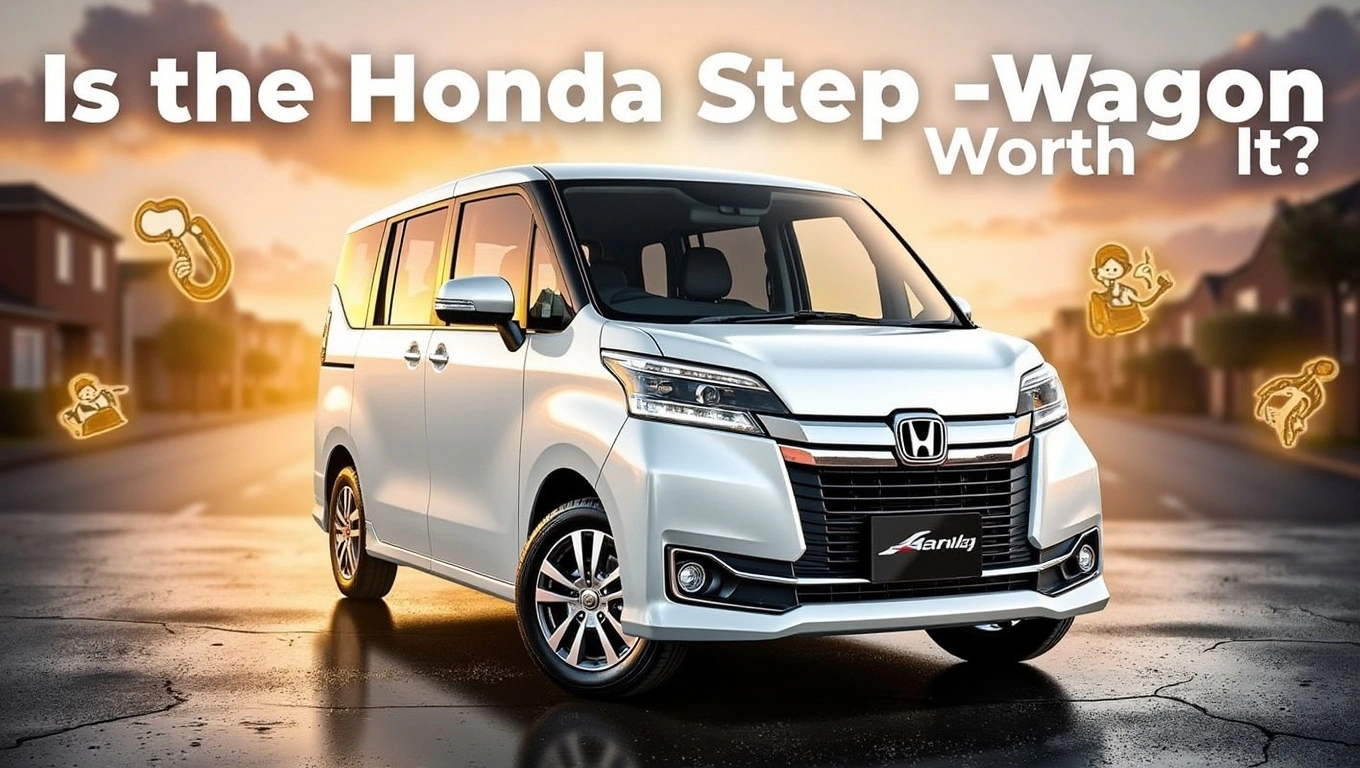
Need a family car that is different? The Honda Step Wagon is a unique import in the already saturated UK market of SUV and MPV cars. The big boxy appearance leaves one wondering whether the Japanese import is worth the thought as compared to a more traditional decision? This guide is a breakdown of the advantages, the disadvantages, and the professional analysis to guide you in determining whether the Honda Step Wagon is the vehicle to purchase.
First, let’s be clear. The Honda Step Wagon is a Japanese Domestic Market (JDM) MPV, or people carrier. This means it was originally built and sold only in Japan. Since it’s over 10 years old, it can be legally imported to the UK under type approval rules. Models from the mid-2000s (like the 3rd generation RK/RF) are most common on British roads. It’s designed for maximum space, practicality, and reliability in tight urban environments qualities that translate well to UK family life.
This is the Step Wagon’s biggest win. Its tall, boxy design creates an incredibly spacious and versatile interior. Many models feature ‘magic seats’ similar to the Honda Jazz, allowing you to flip, fold, and tumble the second and third rows in countless configurations. Need to carry seven people? No problem. Need a flat floor for a washing machine or a week’s camping gear? Easily done. In the case of big families or those who carry heavy items on a regular basis, this space is a game changer.
Honda has a good image of producing bulletproof engines. The Step Wagon is equipped with a 2.0-liter i-VTEC petrol (K20A type) that is famous in its long-life and ease. It is not as stressed as modern turbocharged engines and it is frequently less expensive to maintain. Engine parts and core components are easily available. It is also cheaper to insure than a high-performance import as it is an older, naturally-aspirated petrol car.
JDM vehicles are usually loaded with the cool extras that their UK-spec counterparts do not have. You can have power sliding doors (immensely helpful in tight parking lots), climate control, keyless entry and panoramic sunroofs depending on the grade. Its high roof and big windows also make the cabin airy and light filled, which passengers adore, and makes travelling sickness and claustrophobia less likely.
Honda has always prioritised safety. Even older Step Wagons often come with a strong complement of airbags (side and curtain), Vehicle Stability Assist (VSA), and anti-lock brakes (ABS). Its rigid body structure was designed to meet Japan’s stringent crash standards. Always check the specific model’s spec, but you can generally feel confident about its protective shell.
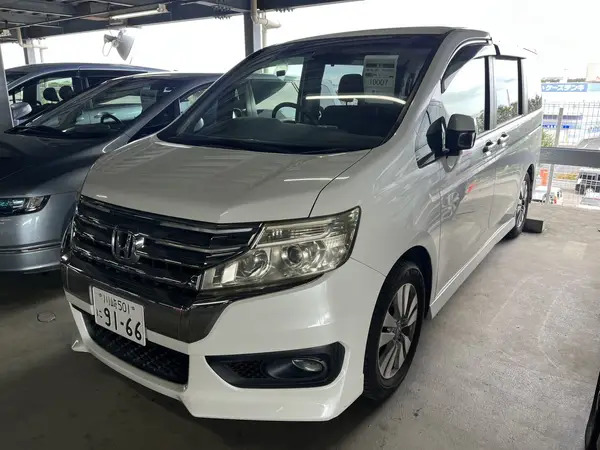
This is the main drawback. As a Japanese import, you must be prepared for extra paperwork and potential delays when registering with the DVLA. More crucially, some insurance companies may charge higher premiums or be hesitant to cover imports – you must shop around for a specialist insurer. Also, mechanical parts are readily available. Whereas certain body panels, trim pieces, or electronic modules may be more difficult and costly to obtain in case they are damaged.
Don’t expect modern diesel MPV efficiency. The 2.0-litre petrol engine, while reliable, will return around 25-30 MPG in real-world mixed driving. This is its biggest running cost. Furthermore, older models may fall into higher VED (road tax) bands and will not be compliant with upcoming ULEZ and Clean Air Zones in cities like London, Birmingham, and Bristol. This is a critical check before buying.
The Step Wagon is not built to be fast, it is constructed to be comfortable. The engine must be pumped to move on and at motorway speeds it can be noisy and underpowered particularly when fully loaded. There is more wind and road noise than in a modern aero-designed car. It is a leisurely cruiser, not an autobahn scoundrel.
The cabin is practical and hard-wearing, but one should not expect luxury. Hard-wearing plastics rather than soft-touch leathers are used. The infotainment will be in Japanese with no English menu in many cases. It is also likely that you will have to change the head unit to a UK version that has Bluetooth, DAB radio and satellite navigation. Some warning chimes and messages will also remain in Japanese.
Although quality, well-conditioned Step Wagons do have some value in the smaller import market, they are not as easy to resell as a Ford S-MAX or a VW Touran. It will be a long process of selling it off to the right buyer who will value its premium features.
We spoke to a UK-based specialist in JDM imports and several Step Wagon owners to get the real-world view.
On Buying: “Always buy through a reputable UK importer,” advises the specialist. “They should have already handled the IVA test, registration, and any necessary modifications like speedometer conversion to MPH. A good importer will also help with the first service and point you to parts sources. Avoid a private import unless you know the process inside out.”
On Servicing: “Most local garages can handle basic servicing,” says one owner from Kent. “Oil, filters, brakes no issue. I use a specialist for anything more complex or for sourcing JDM-specific parts. I’ve found online forums and UK owner clubs to be invaluable for advice.”
On Living With It: “It’s transformed our family trips,” reports a father of three from Scotland. “The space is incredible, and the kids love the sliding doors. Yes, fuel costs are higher, but we save on finance payments by buying an older, outright affordable car. It feels like a tool designed purely for family life, not a fashion statement.”
The Honda Step Wagon is not for everyone. It is a brilliant, left-field choice for a specific type of buyer.
It IS worth it if: You prioritise unbeatable interior space and practicality above all else. You have a large family or need to regularly carry lots of cargo. You value proven reliability and lower maintenance costs over cutting-edge tech. You are used to the ownership procedure of an import, and have verified ULEZ implications to the location. It's also great for you if you need a unique, personality-filled car that is not like other cars.
It is NOT worth it if: You cover high annual mileage and need the best fuel economy. You must drive in a UK Clean Air Zone daily. You want the latest safety tech, infotainment, and refined driving experience. You prefer the convenience and peace of mind of a mainstream UK-used car with a widespread dealer network.
To wrap up, the Honda Step Wagon is a highly practical and very dependable workhorse. It is totally logical if your priorities are space, simplicity, and durability, and you are ready to navigate the details of import ownership. With trusted importers like Nobuko Japan, the process becomes even more manageable. And for the right family, it is not only worth it. it is the ideal, affordable solution.
Yes, once a reputable importer completes the IVA test and DVLA registration, it is fully road-legal.
Potentially, but specialist UK JDM insurers offer competitive rates for these reliable, non-performance family vehicles.
Expect 25-30 MPG from the 2.0 petrol engine; it’s reliable but not efficient by modern standards.
Most older models are non-compliant, meaning you will likely pay a daily charge in clean air zones.
Standard mechanical parts are easy, but specific Japanese body panels or electronics may require specialist importers.
For Latest updates
2026 Costs Breakdown: Importing a Japanese Car to UK, Ireland and CyprusImporting a Japanese vehicle...

Japan's reputation as makers of best Japanese cars; electric-proof, high-tech, and exciting automobi...
There is more to buying a car in Japan than the auction price. The final price comes as a great shoc...
.png)
Importing a car from Japan to the UK is an exciting process. However, understanding the shipping tim...
