
An honest guide for UK buyers: real savings, real drawbacks, real numbers
By Nobuko Japan | Updated: April 2026 | Based on 500+ UK imports handled
10+ Years Experience | HMRC Compliant | 500+ UK Buyers Helped | Real Case Studies
| Japanese import cars cost 20 to 40% less than UK dealer equivalents and arrive with lower mileage and less corrosion. The main drawbacks are an 8 to 14 week wait time, an IVA test for cars under 10 years old costing £200 to £300, and insurance premiums that run 10 to 20% higher. For patient buyers who plan to keep the car 3 or more years, the financial case is strong. For buyers who need a car quickly or plan to sell within a year, a UK dealer car makes more practical sense. |
Japanese import cars are everywhere on UK roads now. Toyota Alphards, Nissan Elgrands, Honda Stepwagons, Suzuki Every vans. The question every buyer asks is the same: are they actually worth it?
The answer is not a simple yes or no. It depends on your budget, your patience, and what you plan to do with the car. At Nobuko Japan, we have handled over 500 UK imports. We have seen buyers save £5,000 and smile. We have also seen buyers spend £550 extra because they skipped the research. This guide gives you both sides. No sales pitch.
This is the number one reason. Japanese auction cars cost significantly less than equivalent UK dealer cars. The gap is even bigger on luxury models.
| Model | UK Dealer Price | Japan Import Landed |
| 2017 Toyota Voxy | £10,000 to £12,000 | £7,500 to £8,500 |
| 2016 Toyota Alphard | £22,000 to £26,000 | £15,000 to £18,000 |
| 2015 Nissan Elgrand | £14,000 to £17,000 | £9,500 to £12,000 |
| Saving (approximate) | £2,500 to £5,000+ |
The saving on a Toyota Alphard alone covers two years of specialist insurance with money left over. That is the financial case in one line.
Japanese drivers average 5,000 to 7,000 miles per year. UK drivers average 7,000 to 10,000. That gap compounds over a decade.
You get a younger engine in the same age body. For buyers who care about reliability over the long term, that difference matters.
Japan uses significantly less road salt in winter than the UK. Rust is one of the biggest killers of UK cars. Japanese cars arrive with clean underbodies and no corrosion on chassis or sills.
NOBUKO JAPAN OBSERVATION We have shipped cars from the snowy regions of northern Japan that showed less underbody corrosion than 3-year-old UK cars we inspected at the same time. This is a consistent pattern across hundreds of shipments, not an isolated case. |
Several of the most popular Japanese imports were never offered through UK dealers. You cannot buy these new in Britain at any price.
If you want something different from the standard Ford, Vauxhall, or BMW inventory, Japan is your only source for these models.
Japanese owners maintain cars with a level of consistency that is unusual in the UK market. Most auction cars arrive with every service stamp from the same dealer. Missing service history is the exception, not the rule.
In the UK, a full-service history is a selling point. In Japan, it is expected.
The UK-Japan Comprehensive Economic Partnership Agreement (CEPA) removed import duty on Japanese-built cars from January 2026. Before this, buyers paid 10% duty on the CIF value (car price plus shipping plus insurance).
Additional saving on VAT: VAT is calculated on duty plus CIF, so zero duty also reduces your VAT bill
This change makes 2026 the best year to import a Japanese car in the history of the UK-Japan trade relationship.
From the moment you win an auction in Japan to the day the car sits on your driveway, you are looking at 8 to 14 weeks minimum. That timeline covers auction processing, export paperwork, sea freight, UK customs clearance, and DVLA registration.
If your current car breaks down tomorrow, an import will not solve your problem. Buy locally for speed. Import for savings.
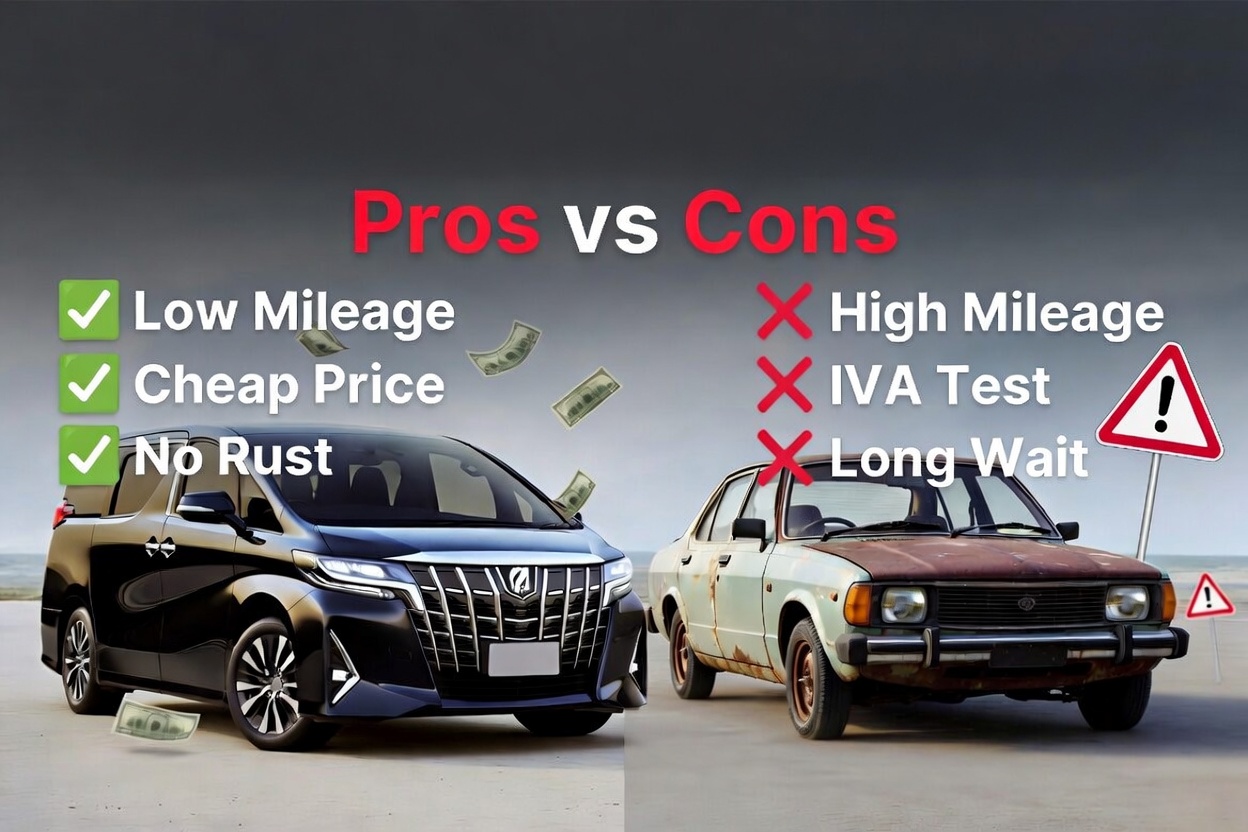
Individual Vehicle Approval (IVA) is a UK government test that checks imported cars meet British road safety standards. Any car under 10 years old needs to pass before it gets a UK registration plate.
THE SIMPLE FIX Buy a car that is 10 years old or older. No IVA required. The car goes straight to a standard MOT. This one decision removes the biggest administrative headache in the entire import process. |
Japanese auction cars are sold as-is. There is no 30-day return window, no dealer guarantee, and no manufacturer warranty transfer. If the engine develops a fault one week after arrival, the repair bill is yours.
The mitigation here is mechanical inspection before shipping. A pre-shipment check in Japan costs £80 to £150 and identifies serious issues before the car leaves the country. We carry this out as standard on every car we handle.
UK insurers treat Japanese imports differently from UK-spec cars. Parts availability concerns push premiums up. Mainstream insurers sometimes refuse cover entirely.
Budget for higher insurance and contact a specialist before committing to a purchase. Knowing your insurance cost upfront removes one unknown from the decision.
Japanese navigation systems run on Japanese maps with Japanese language menus. They are not upgradeable to UK maps in most cases. The Japanese FM band also stops at 90MHz while the UK goes to 108MHz, cutting off most UK radio stations.
Japanese imports sell to a smaller pool of buyers in the UK. Many private buyers avoid imports due to unfamiliarity with the paperwork or concern about parts. When you come to sell, you will typically get less than a UK-spec equivalent.
The resale gap is real but manageable. If you imported at £2,500 to £5,000 below UK dealer price and sell at £1,000 to £1,500 less, you still come out ahead. The calculation only works if you keep the car long enough to absorb the import costs.
| Feature | Japanese Import | UK Dealer Car |
| Purchase price | 20 to 40% lower | Higher |
| Annual mileage | 5,000 to 7,000 miles/year | 7,000 to 10,000 miles/year |
| Rust risk | Very low | Moderate to high |
| Delivery time | 8 to 14 weeks | Same day |
| Warranty | None (as-is) | 3 to 12 months |
| IVA test needed | Yes (if under 10 years) | No |
| Insurance cost | 10 to 20% higher | Standard rate |
| Resale value | Lower buyer pool | Stronger resale |
| Unique models | Alphard, Delica, N-Box, Elgrand | Standard market models only |
| Import duty (2026) | 0% under UK-Japan CEPA | Not applicable |
| Service history | Typically complete and stamped | Often incomplete |
Many buyers calculate purchase price and shipping and stop there. The real number includes everything from auction win to UK road. Here is the complete picture.
| Cost Item | Typical Cost | Notes |
| Auction purchase price | £5,000 to £20,000+ | Depends on model and grade |
| Japan auction + agent fees | £300 to £600 | Commission + auction house fee |
| Export prep and deregistration | £150 to £300 | Mandatory before export |
| RoRo shipping (Japan to UK) | £900 to £1,800 | Roll-on Roll-off vessel freight |
| Marine insurance | £80 to £200 | 1.5 to 2% of car value |
| UK port handling | £200 to £400 | Terminal and release fees |
| Import duty (2026) | £0 | 0% under UK-Japan CEPA |
| Import VAT (20% on CIF) | Calculated on total | Private buyers cannot reclaim |
| IVA test (if under 10 years) | £200 to £300 | Plus repair costs if failed |
| DVLA registration | £55 | First UK registration |
| MOT test | £55 to £80 | Required for UK road use |
| Headlight beam adjustment | £50 to £150 | RHD cars often need adjustment |
EXAMPLE: 2015 TOYOTA ALPHARD Auction price £12,000 + shipping £1,500 + insurance £150 + port handling £300 + import duty £0 + VAT £2,730 + DVLA £55 + MOT £60 = total landed approximately £16,795. A UK dealer equivalent costs £22,000 to £25,000. Saving: £5,200 to £8,200. |
He imported a 2012 Toyota Alphard. Twelve years old, no IVA required. He waited 10 weeks and paid £7,500 total landed. A UK dealer wanted £12,000 for a comparable car. He saved £4,500.
He uses Adrian Flux for insurance at £600 per year. He plans to keep the car for 7 years. His total import saving over the ownership period covers insurance for the first 7 years with money left over.
His verdict: The car is in better condition than anything I test drove at UK dealers at twice the price. The wait was the hardest part and it was fine.
He imported a 2017 Nissan Elgrand, 9 years old, IVA required. He did not research the IVA process before buying. The car failed on a missing rear fog light and a km/h-only speedometer.
His verdict: I still saved money overall but the hassle was more than I expected. I would buy a car over 10 years old next time.
He still came out £1,200 ahead of buying the same car from a UK dealer. The lesson is not that imports are risky. The lesson is that skipping research on IVA turns a smooth process into a stressful one.
| Import if you are this buyer | Buy local if you are this buyer |
| Can wait 8 to 14 weeks for delivery | Need a car within 6 weeks |
| Keeping the car 3 or more years | Plan to sell within 12 months |
| Buying a car over 10 years old | Want a car under 10 years and hate paperwork |
| Comfortable with specialist insurance | Want the cheapest possible insurance |
| Want a model not sold in UK | Want a manufacturer warranty |
| Budget-conscious, long-term owner | Impatient with admin and paperwork |
For patient buyers who plan to keep the car 3 or more years, yes. You save 20 to 40% on purchase price and get lower mileage with less corrosion. For buyers who need a car quickly or plan to sell within a year, a UK dealer car is more practical.
Individual Vehicle Approval is a UK government test checking that imported cars meet British road safety standards. Cars under 10 years old require it before registration. Cost is £200 to £300 plus any repair costs for failed items. Cars over 10 years old go straight to a standard MOT.
From auction win to driveway, expect 8 to 14 weeks. This covers auction processing, Japanese export paperwork, RoRo sea freight, UK customs clearance, and DVLA registration.
Most do. Japanese owners maintain cars with unusual consistency. Stamped dealer service records from a single garage throughout the car's life are common. Missing history is the exception.
Japan uses significantly less road salt in winter than the UK. Underbodies stay clean. A 10-year-old Japanese import commonly shows less corrosion than a 3-year-old UK car from a salted road area.
Toyota Alphard, Toyota Vellfire, Toyota Voxy, Honda N-Box, Honda Stepwagon, Suzuki Hustler, Suzuki Every, Mitsubishi Delica D5, and Nissan Elgrand were never sold through UK dealers and are only available as imports.
Yes, typically by £1,000 to £1,500 compared to a UK-spec equivalent. The buyer pool is smaller. The import saving at purchase normally outweighs the resale gap if you keep the car for 3 or more years.
Add auction price plus Japan agent fees, shipping, marine insurance, UK port handling, import VAT at 20%, IVA test if under 10 years, DVLA registration, and MOT. From 2026, import duty is £0 under the UK-Japan CEPA. On a £12,000 auction car, expect a total landed cost of approximately £16,000 to £17,000.
Japanese auction grades run from 1 (poor) to 5 (excellent). Grade 3.5 and above is the reliable minimum for UK imports. Grade 4 or 4.5 cars represent the best balance of condition and price. Grade 5 is near-showroom condition. Always request the full auction sheet, not just the grade number.
About This Guide
Written by the Nobuko Japan import team. We have handled over 500 UK imports since 2014. Every claim in this guide is based on direct experience with real shipments, real HMRC filings, and real customer outcomes. All duty rates reflect current HMRC tariff schedules and UK-Japan CEPA provisions. Last reviewed: April 2026.
For Latest updates
The Pakistani car market is constantly changing. In fact, sedan cars have been dominating the roads ...
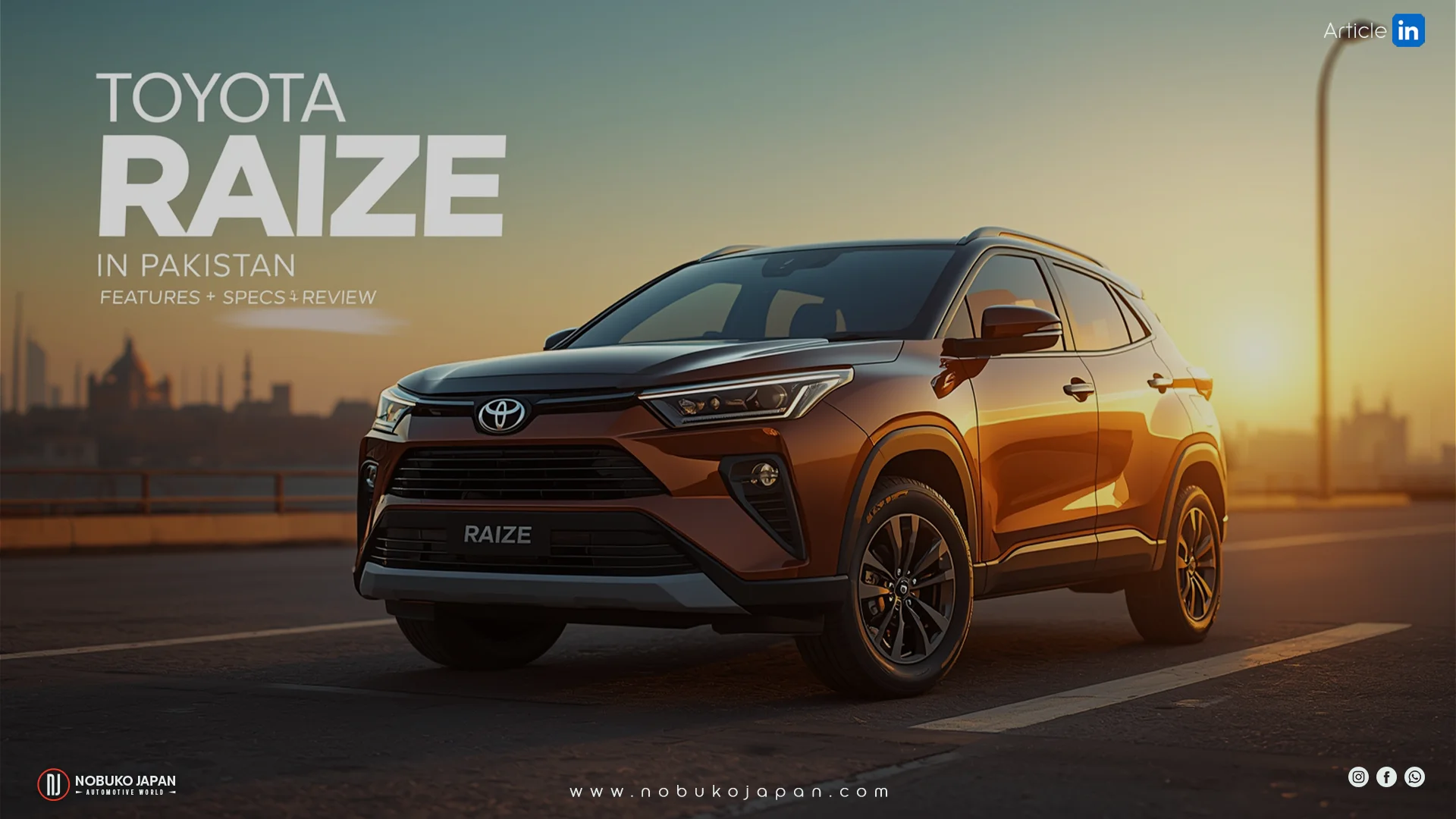
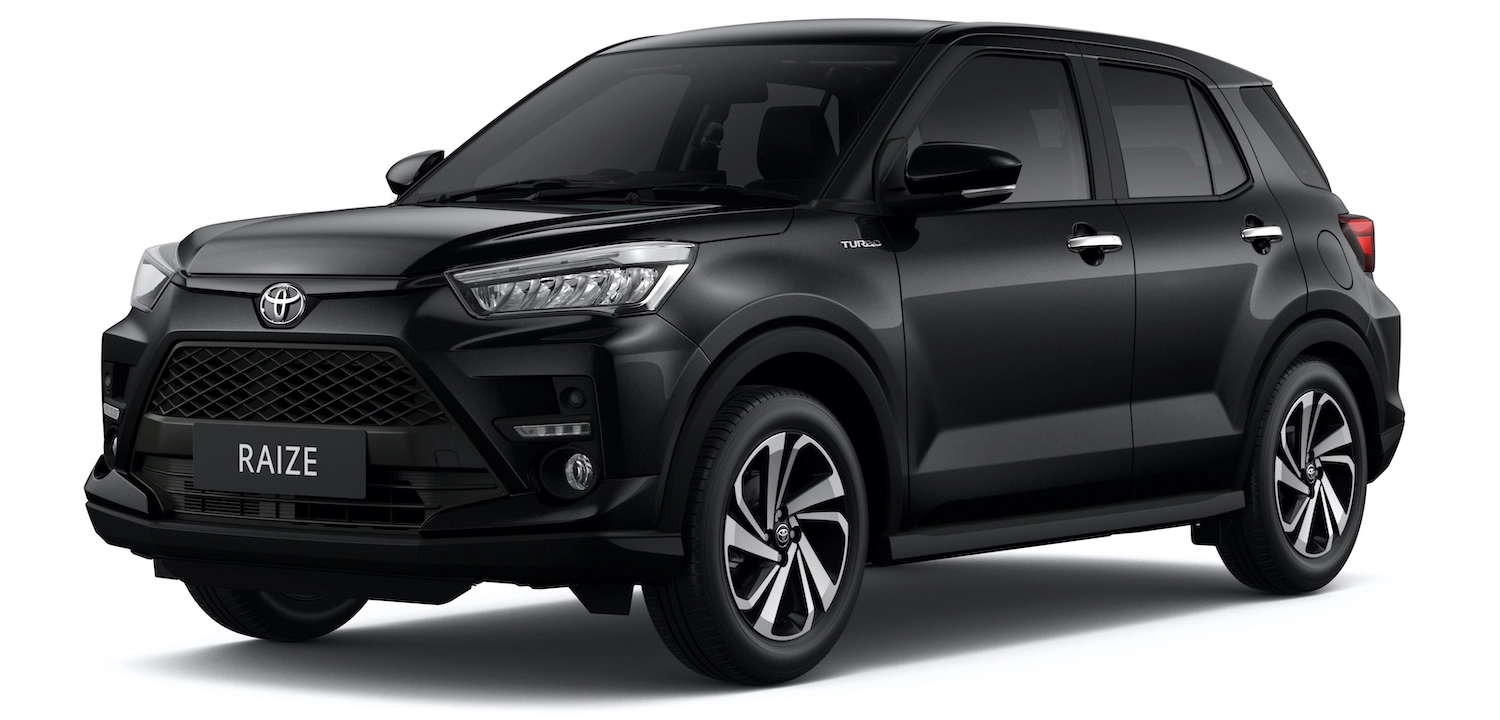
The Toyota Raize has gained popularity within the Pakistani roads since this mini-SUV resonates stro...
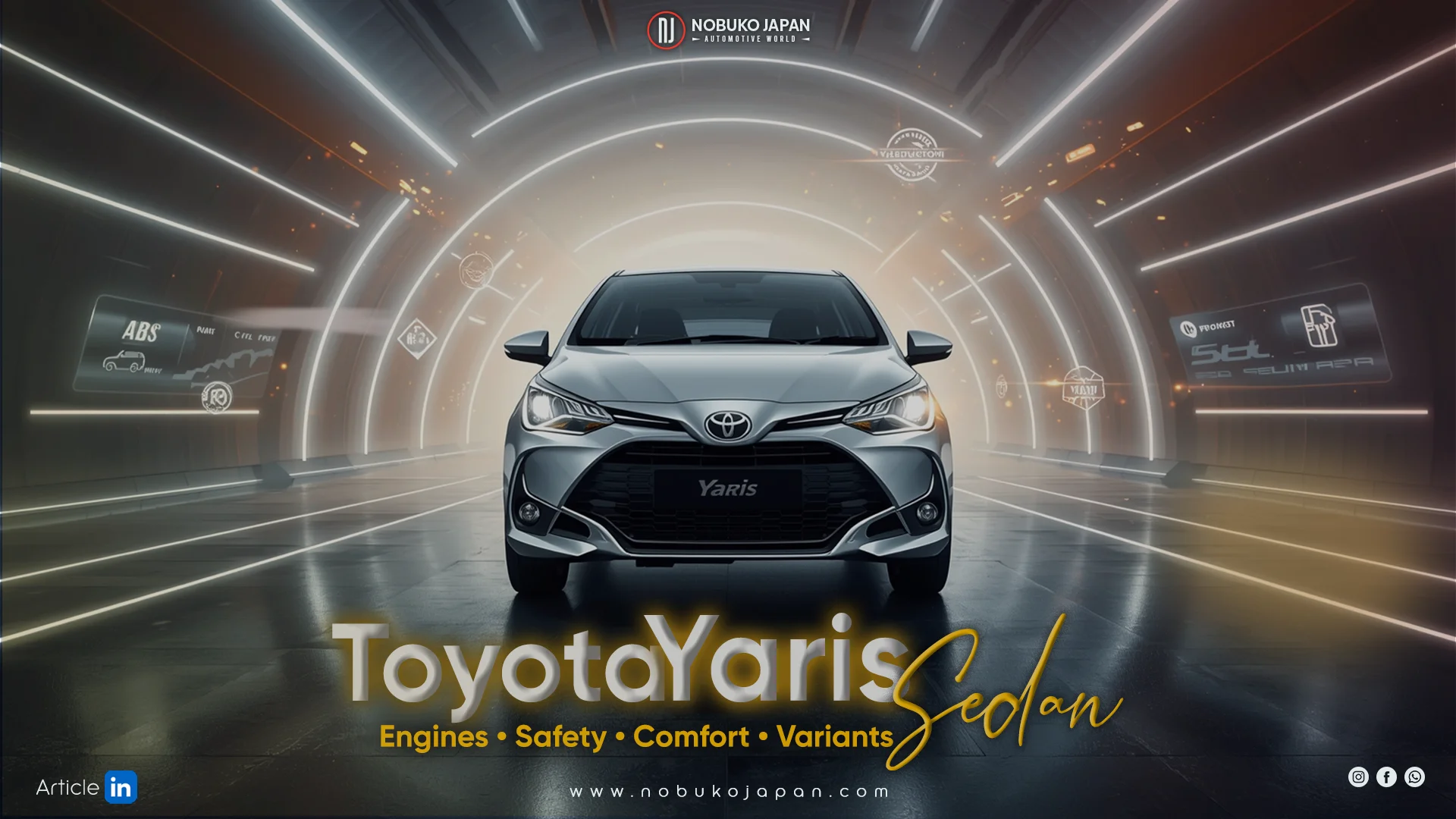
Toyota Yaris Sedan is one of the major vehicles in the Toyota portfolio across the globe. This provi...
Considering the purchase of a new automobile in Pakistan? The traffic is heavy, the cost of gas is n...
Check out other articles related to Buying Guides.
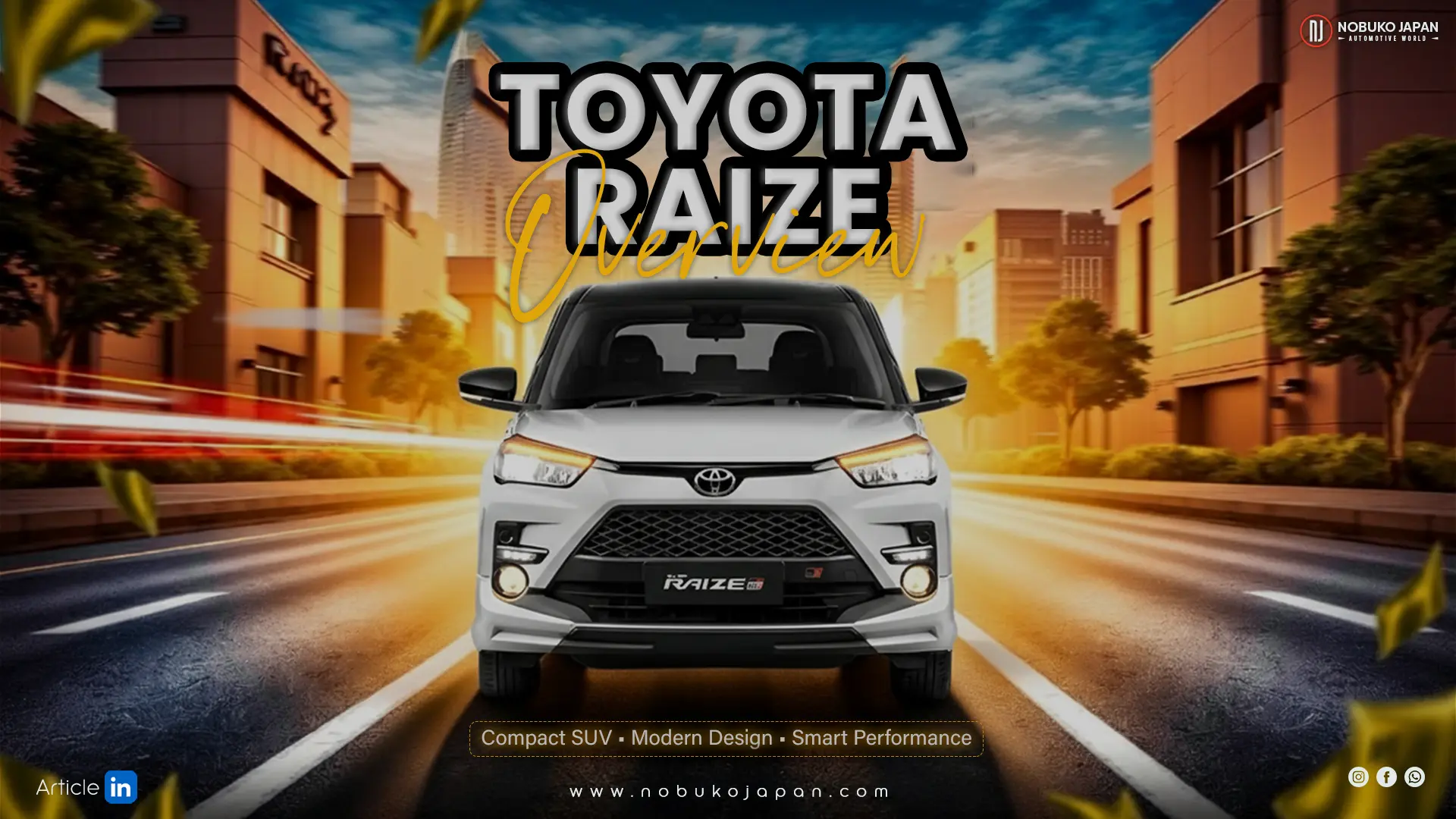
Is the Toyota Raize the Perfect Small SUV for Pakistani Families?