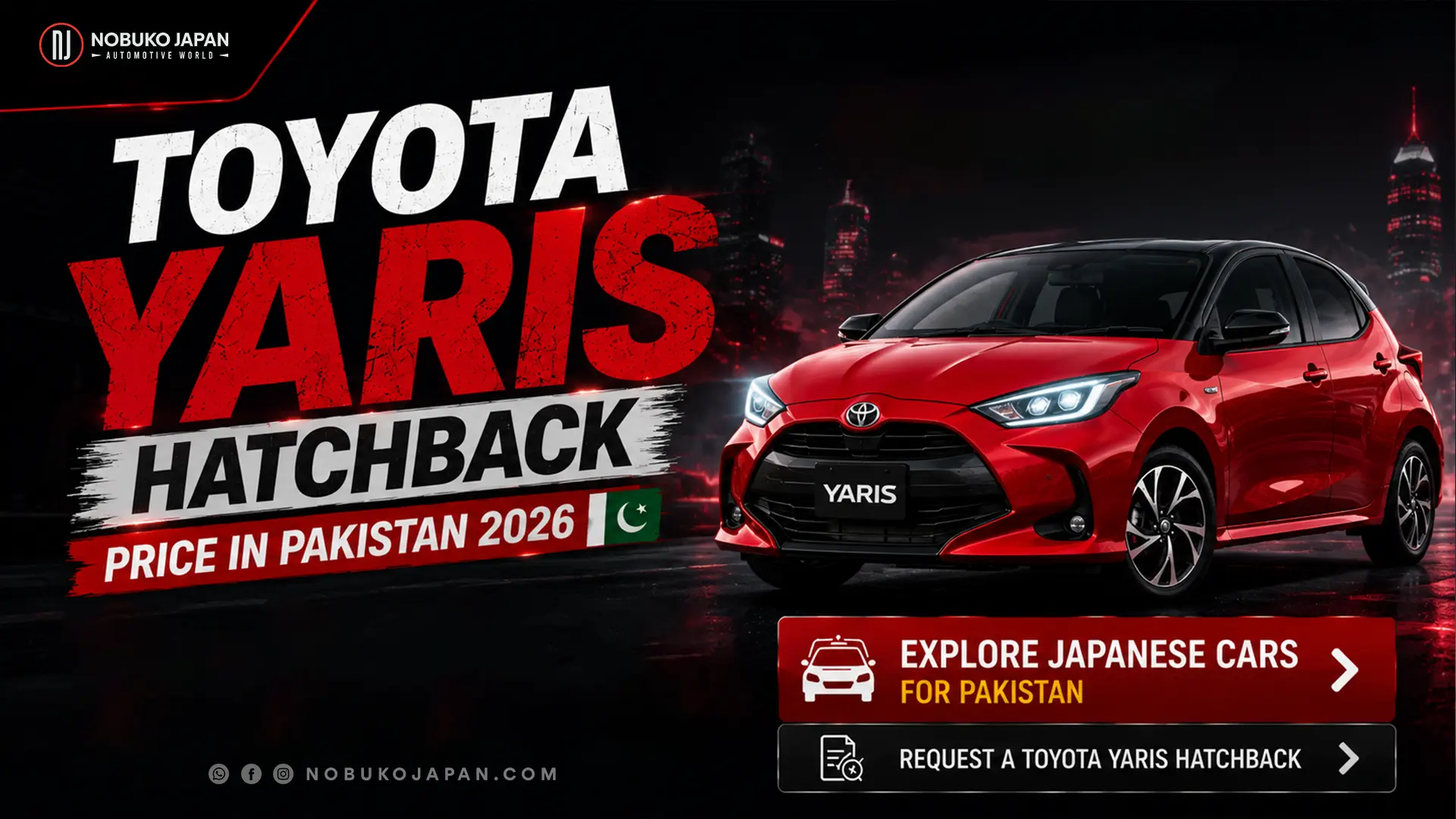
The Toyota Yaris Hatchback is one of the most misunderstood cars in the Pakistani market, and the confusion costs buyers money.
It is not the Yaris you see at Toyota dealerships. That car is a locally assembled sedan. The Yaris Hatchback is a completely different vehicle, built on a different platform, imported from Japan, and sold in grades that no Pakistani showroom stocks. It is also one of the most economical cars you can legally bring into the country.
There is no fixed price, no dealer warranty and no standard spec sheet, which means the difference between a good purchase and an expensive one comes down to knowing what you are looking at.
This guide covers the Toyota Yaris hatchback price Pakistan buyers are paying in 2026, every variant explained, full specifications, real fuel figures, a complete import cost breakdown, customs duty by engine size, and registration charges.
Worth settling before anything else, because these are two unrelated cars sharing a name.
| Feature | Yaris Sedan | Yaris Hatchback |
| Sold by | Indus Motor Company, locally assembled | Import only |
| Body | Three-box sedan | Five-door hatchback |
| Engines | 1.3L, 1.5L | 996cc, 1490cc, 1.5 hybrid |
| Price | PKR 46.49 – 60.49 lac ex-factory | PKR 41.5 – 48.05 lac imported |
| Warranty | Full IMC warranty | None from Toyota Pakistan |
| Hybrid available | No | Yes |
If you want a warranty and a dealership, you want the sedan. If you want a hybrid, sharper handling and Japanese-market equipment, you want the hatchback... and you will be importing it.
Everything below is about the hatchback.
Import-only pricing means model year, grade, auction condition and the exchange rate all move the number.
Current market pricing sits between roughly PKR 41.5 lac and PKR 48.05 lac.
| Variant | Approximate price |
| Yaris Hatchback X | PKR 41.5 lac |
| Yaris Hatchback G 1.0 | PKR 43 lac |
| Yaris Hatchback GR RS | PKR 43 lac |
| Yaris Hatchback 1.5L SE+ | PKR 46.15 lac |
| Yaris Hatchback Hybrid X / Hybrid Z | Up to PKR 48.05 lac |
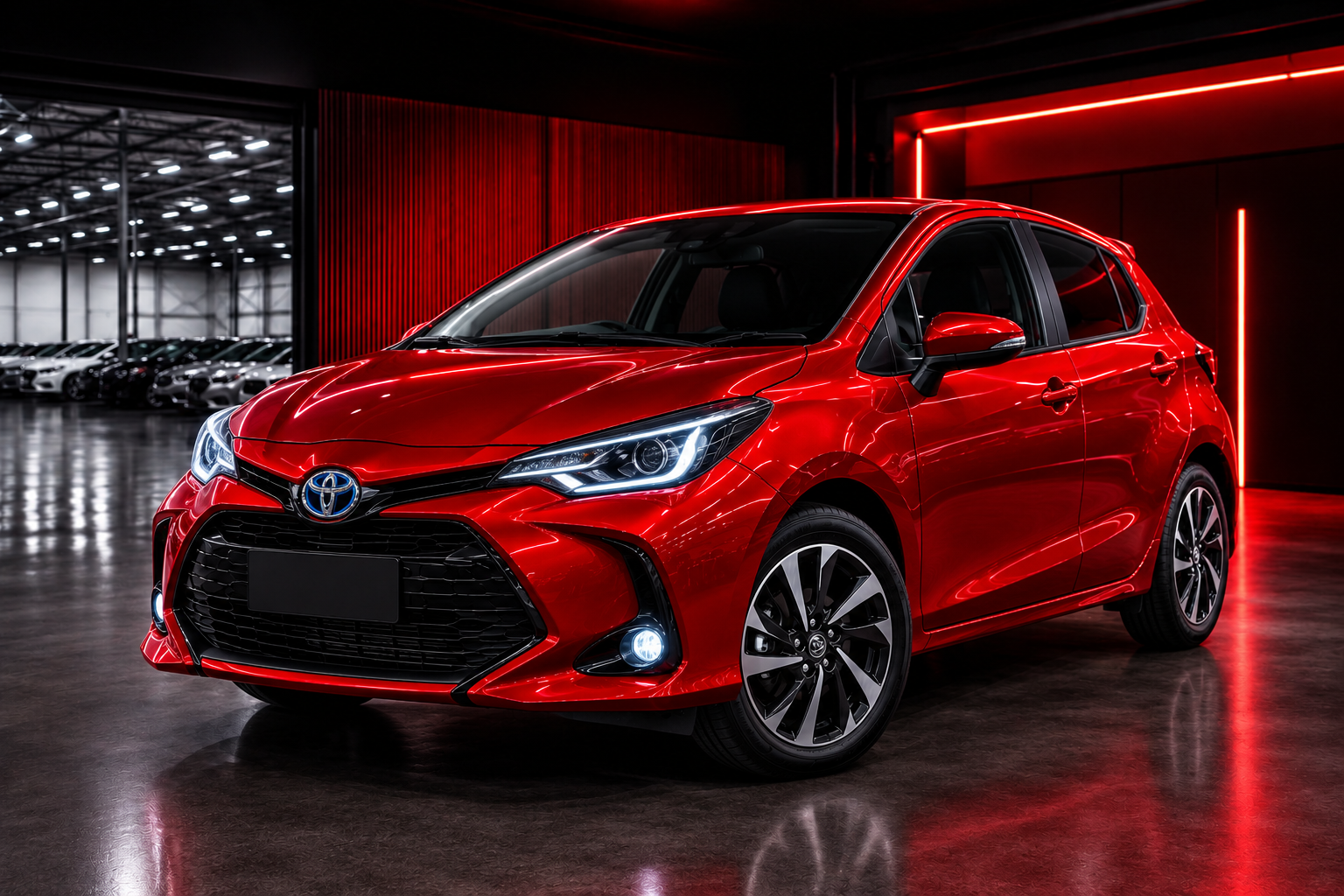
Compared with the Raize, this is a much tighter band. The Yaris Hatchback range tops out at roughly the point where Raize pricing is only getting started, which makes it the more predictable purchase of the two.
What moves the price: model year, auction grade, verified mileage, whether the unit is a fresh import or has already changed hands locally, and the JPY and USD rates on purchase day. A fresh import with a clean, translated auction sheet commands a premium over a locally traded car with an unclear history... and it is worth paying.
Japanese grade names do not always match what Pakistani listings advertise. Verify the actual grade rather than the ad title.
The entry grade and the market's price anchor. Basic wheels, halogen lighting, fabric seats and a simple audio unit. Mechanically sound and the cheapest route into ownership, but sparse on equipment.
Built around the 996cc three-cylinder. This is the cheapest grade to import and register in Pakistan because of where it sits in the duty and token tax brackets a point covered in detail further down. Adds convenience equipment over the X.
Steps up to the 1490cc engine, delivering noticeably stronger performance alongside better equipment. More capable on the motorway, but it crosses into a more expensive duty bracket.
The sporting grade, drawing on Toyota Gazoo Racing's involvement with the Yaris platform. Firmer suspension tuning, sportier trim and a sharper character. Appeals to enthusiasts rather than commuters.
The 1.5-litre hybrid grades, and the most economical cars in this guide by a comfortable margin. The Hybrid Z carries the fullest equipment list. They are also the most expensive to buy and to import.
Practical advice: the G 1.0 is the value pick on total cost of ownership. The hybrid is the cheapest to run but the most expensive to land.
The current fourth-generation Yaris Hatchback sits on Toyota's TNGA-B platform... the same architecture underneath the GR Yaris.
| Specification | Detail |
| Body type | 5-door subcompact hatchback |
| Seating | 5 |
| Platform | TNGA-B |
| Engine options | 996cc 3-cyl, 1490cc petrol, 1.5 hybrid |
| Transmission | CVT, manual on selected GR grades |
| Drive side | Right-hand drive |
| Top speed | Approximately 200 km/h |
| Fuel average | 15–21 km/l |
| Generation | 4th, 2020 onward |
What TNGA-B delivers. A low centre of gravity and genuinely composed handling. The Yaris Hatchback is widely regarded as a benchmark for driving dynamics in its class, and it feels considerably more planted than its size suggests.
What it costs you. Rear legroom and cargo space are limited even by hatchback standards. This is a small car that drives brilliantly, not a small car that carries a lot.
Found in the G 1.0. Naturally aspirated, modest on power, but light and economical. Its real advantage is fiscal: it sits in the 801–1000cc customs bracket, currently the cheapest band to import into Pakistan, and qualifies for lifetime token tax treatment.
Adequate for city driving. Working hard on the motorway with four aboard.
The mainstream engine, fitted to the 1.5L SE+ and related grades. Meaningfully quicker and more relaxed at speed, with enough performance to make motorway journeys comfortable.
The trade-off is that 1490cc falls into the 1301–1500cc duty bracket, which carries regulatory duty, additional customs duty and higher excise on top of customs duty.
Toyota's hybrid system pairing the 1.5-litre petrol engine with an electric motor. This is the fuel economy champion of the range and the smoothest of the three in traffic.
It shares the 1490cc bracket, so it carries the same higher duty burden. The most economical Yaris to run is the most expensive one to import... a genuine tension worth thinking through.
The Yaris Hatchback is among the most economical cars available to Pakistani importers, and the hybrid is exceptional.
| Condition | Realistic figure |
| Heavy city traffic (996cc) | 13–15 km/l |
| Mixed driving (996cc / 1.5) | 15–17 km/l |
| Motorway cruising | 18–21 km/l |
| Hybrid, city driving | 20–24 km/l |
Owners driving the hybrid gently in city conditions have reported figures in the low twenties per litre, which is genuinely remarkable for a petrol-engined car in Pakistani traffic.
What affects it: air conditioning through a Karachi or Lahore summer pulls city figures down noticeably. The 996cc engine rewards a light throttle and suffers when pushed. Tyre pressure and fuel quality both make measurable differences.
Context: if minimising fuel spend is your priority above all else, the Yaris Hatchback hybrid is close to the best option legally importable into Pakistan today.
Equipment varies substantially by grade, so verify against the specific unit.
Commonly found on G and above: LED headlamps, alloy wheels, keyless entry and push-button start, climate control, a touchscreen infotainment unit, reversing camera and steering-mounted controls.
Higher and hybrid grades add: Toyota Safety Sense with pre-collision braking, adaptive cruise control and lane departure warning; a digital instrument cluster; a generous airbag count; and upgraded interior materials. Some units carry a 360-degree camera.
The infotainment issue. JDM units arrive with Japanese-language head units running Japanese navigation that will not function in Pakistan. Most owners fit an aftermarket Android head unit with Apple CarPlay and Android Auto. Ask whether this has already been done... a car with a converted unit has saved you both cost and a workshop visit, and that should be reflected in the price you agree.
The auction price is roughly half of what you will spend.
| Cost component | What it covers | Notes |
| Auction purchase price | The winning bid in Japan | Varies by grade, year and condition score |
| Auction and export fees | Auction charges, deregistration, inland transport | Relatively small and fairly predictable |
| Inspection | Pre-shipment inspection where required | Mandatory for commercial imports |
| Freight and insurance | Japan to Karachi | Moves with shipping rates |
| Customs duty | On customs-assessed value | 35% for 996cc, 40% for 1490cc |
| Regulatory duty | Commercial used imports | 30% for FY2026-27; also 10% on the 1301–1500cc band |
| Additional customs duty | 1301cc and above only | 4% |
| Federal excise duty | By engine bracket | Higher above 1300cc |
| Sales tax | On assessed value plus duties | Standard rate |
| Income tax / withholding | Higher for non-filers | Filer status matters materially |
| Port and clearing | Terminal handling, agent fees, documentation | Varies by clearing agent |
The point most buyers miss: duty is assessed on the customs valuation, not on what you paid at auction. Customs applies its own figure, and it may not match your invoice. Any exact landed cost quoted before that valuation exists is guesswork.
As a planning figure, duties, taxes and clearing typically add somewhere in the region of 70% to 90% on top of landed CIF value for a sub-1000cc import under the current structure, and materially more above 1300cc. Treat that as budgeting guidance, not a quotation.
Pakistan's duty structure changed on 1 July 2026 under the amended Finance Bill 2026-27, and the Yaris Hatchback range straddles the most important line in it.
| Engine bracket | Customs duty before | Customs duty now | RD | ACD |
| 801–1000cc (Yaris 996cc) | 55% | 35% | 0% | 0% |
| 1301–1500cc (Yaris 1490cc & hybrid) | 60% | 40% | 10% | 4% |
This is the single most important thing in this guide.
The 996cc G 1.0 sits below 1000cc, so it attracts 35% customs duty with no regulatory duty and no additional customs duty. The 1490cc and hybrid grades sit above 1300cc, where 40% customs duty is joined by 10% regulatory duty, 4% additional customs duty and higher federal excise.
The gap between those two positions is substantial... often several lakh rupees on cars with similar auction values.
Two further changes help all grades:
Registration charges vary by province and are assessed on customs value for imported vehicles, which is why an imported Yaris Hatchback costs more to register than a locally assembled car of similar price.
What you will pay:
The bracket effect again. The 996cc G 1.0 qualifies for lifetime token tax treatment; the 1490cc and hybrid grades pay annually on invoice value. Across several years of ownership, that compounds.
Always verify final figures with your provincial Excise office or the ePay portal, as rates change by notification.
Pros
Cons
For the right buyer, it is one of the smartest imports available.
It makes sense if your driving is mostly urban, fuel economy is a priority, you value handling, you are a couple or a single commuter without regular rear passengers, and you are comfortable owning an imported car without dealer support. The hybrid in particular is difficult to beat on running costs.
It makes less sense if you regularly carry four adults, you need boot space, your route includes rough roads or standing water, or you want a dealership to handle everything.
The decision that matters most is engine choice. The 996cc grade is dramatically cheaper to import and register. The 1.5 and hybrid grades are better cars that cost meaningfully more to land. Work out that difference on your specific candidates before falling in love with a particular listing.
And whichever grade you choose, buy the documentation as carefully as you buy the car. A translated auction sheet and verified mileage protect both your ownership experience and your resale position.
Grade choice determines your landed cost on this car more than almost anything else, which makes it worth getting right before you bid rather than after. Buying direct from a Japanese auction means you see the condition grade, the panel-by-panel inspection map and the verified mileage up front, and you know exactly which engine and duty bracket you are committing to.
With duties on sub-1000cc imports at their lowest in years, the timing works in your favour.
Nobuko Japan bids on your behalf across Japan's largest auction houses, translates the grading sheet, carries out a 200-point inspection, and handles export documentation and shipping to Pakistan.
For Latest updates

The Japanese car auction market is continuously evolving with time. They offer buyers worldwide acce...

Japanese brands are the smart choice when you need a reliable car. In fact, companies like Toyota an...

Cost Breakdown of Importing a VehicleThinking about importing a car? Then you're at the right place....
.webp)
Why the Toyota Alphard is Gaining Popularity in the UKThe Toyota Alphard car has literally taken the...
Check out other articles related to Market trend.